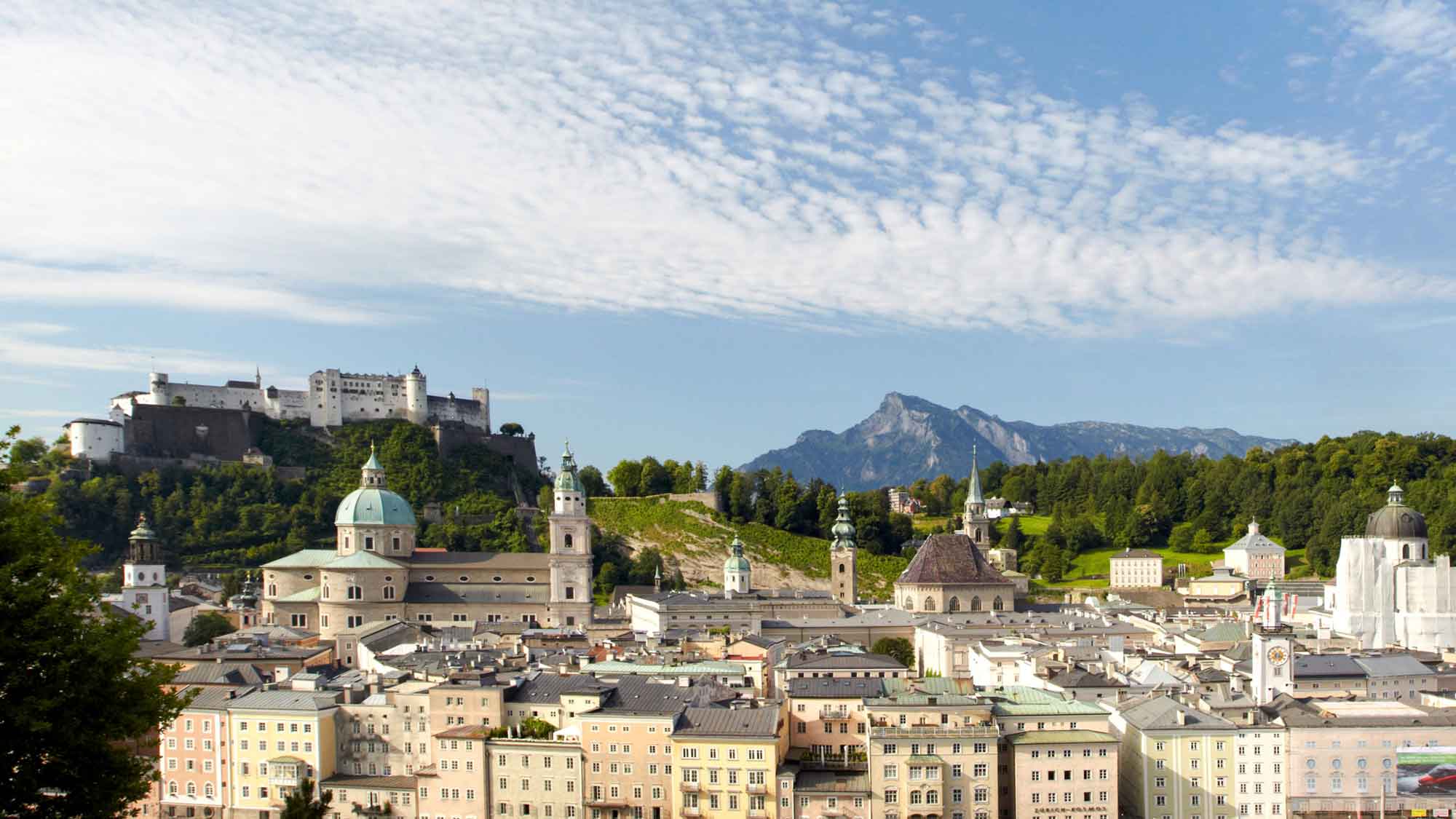
Salzburg City Council adopted its climate roadmap for 2040 in October 2025, and actual implementation is now getting under way. The city authorities are keen to ensure that this transformation process is socially responsible and to get housing developers, energy suppliers, businesses and the general public actively involved. In its “Goethesiedlung” pilot neighbourhood, a new neighbourhood hub will serve as a central interface for bringing projects and stakeholders together.
The major challenge here lies in moving quickly from planning to delivery. By formulating Salzburg’s climate roadmap for 2040, it became clear that the implementation of many measures does not lie solely within the city’s sphere of responsibility. Rather, root-and-branch structural changes require numerous stakeholders to work together and citizens to get actively involved. Salzburg’s climate roadmap was deliberately designed as a “living document”, meaning that it can be updated on an ongoing basis and adapted as new findings and developments emerge.
„We want to devote more attention to social sustainability this year,” explains Pia Schauz, head of the “pioneering city” project. “This all-encompassing project will only be a success if we take all the locals along on the journey with us and if everyone is able to afford this transformation, e.g. in the areas of building renovation and mobility.“
Building capacity and sharing knowledge
The partnership with the BMIMI has enabled the city administration to recruit extra staff, who are building capacity in a targeted way and driving key issues of the climate transformation. The new roles are based in various specialist departments, including Construction (energy, buildings), Spatial Planning (neighbourhoods, mobility) and Operations (waste management, circular economy). In terms of the administration’s day-to-day work, therefore, the climate targets are being placed front and centre.
“Besides this start-up financing, the other national and international funding and innovation programmes are also proving very helpful for us. We’re using them for RTI projects, in order to achieve the energy and mobility transformation faster,” Schauz says. Another key benefit of the public-public partnership is the dialogue being conducted about innovative solutions, examples of best practice and new standards as part of the support process.
“The integrated approach and the sharing of knowledge amongst the pioneering cities are making the project particularly valuable for us.”
A digital tool for carbon footprints
The City of Salzburg is currently trialling Climate View, a web-based planning and monitoring tool that provides a standardised method for logging climate neutrality roadmaps digitally and structuring them so that they can be reviewed efficiently using KPIs and updated if there are any gaps in their implementation. Greenhouse gas emissions are mapped in a structured way by sector, while various scenarios and reduction pathways can be simulated, linked to specific actions and quantified in terms of their carbon emissions. On this basis, progress can be monitored using key performance indicators, and measures can be adjusted as needed. As Pia Schauz explains: “This gives us the evidence we need to see where we have to adjust course or pick up the pace in order to achieve our climate targets.”
Connecting it all: the neighbourhood hub
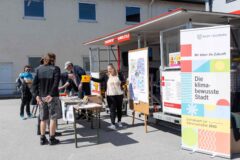
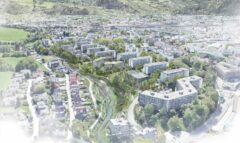
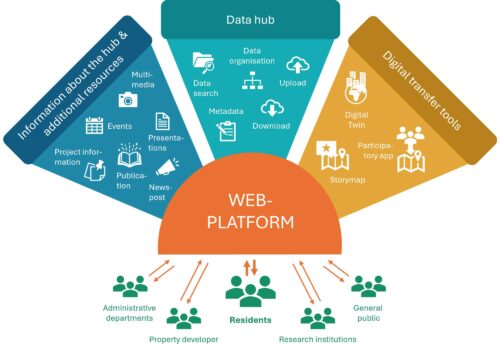
Salzburg is one of three pioneering cities in Austria to have secured funding for creating a “neighbourhood hub”. Project partner in Salzburg is iSPACE plus GmbH. In the district of Itzling, with the pilot neighborhood Goethesiedlung, not only are technological innovations tested in practice, but there is also a strong focus on social issues. A great many construction and renovation projects are lined up for the next few years in order to make the area fit for the future and keep it so over the long term. Yet the neighbourhood is also home to many people from particularly vulnerable groups that will be directly affected by the changes that are planned. This means that inclusive solutions are needed, e.g. for residents who will need to move out of their homes temporarily during renovation work. An extensive analysis of the social environment was carried out for the Goethesiedlung before the project even got under way, and a number of fundamental recommendations for mobility, green spaces and social cohesion in the neighbourhood have already been identified based on a residents’ survey. The plan is for the neighbourhood hub to act as an innovative link between the administration, neighbourhood management, businesses and the general public and support both the implementation of measures and the processes of participation.
The circular economy – a cross-cutting topic
When the climate roadmap was being drawn up, it became clear that the issue of the circular economy affected all areas of the city. There are numerous overlaps, e.g. with regard to sharing models, the use of recyclable materials and product life-cycle analyses. One priority will be to establish sustainable, circular procurement firmly across the board, an area in which Salzburg is keen to learn from other pioneering cities and devise and implement suitable criteria and processes.
Capacity and skills are being built up in local neighbourhood hubs in a targeted way to help bring about climate-neutral, climate-resilient urban quarters. These hubs are creating a productive environment for innovation, trials, networking, monitoring, data management, research and knowledge transfer. They are serving as a central point of contact for all stakeholders as well as facilitating RTI, trial and practical projects, enabling learning and experimentation in a hands-on context, and allowing knowledge to be shared with other urban quarters.
klimaneutralestadt.at/en/projects/pioneer-cities/salzburg.php
Share