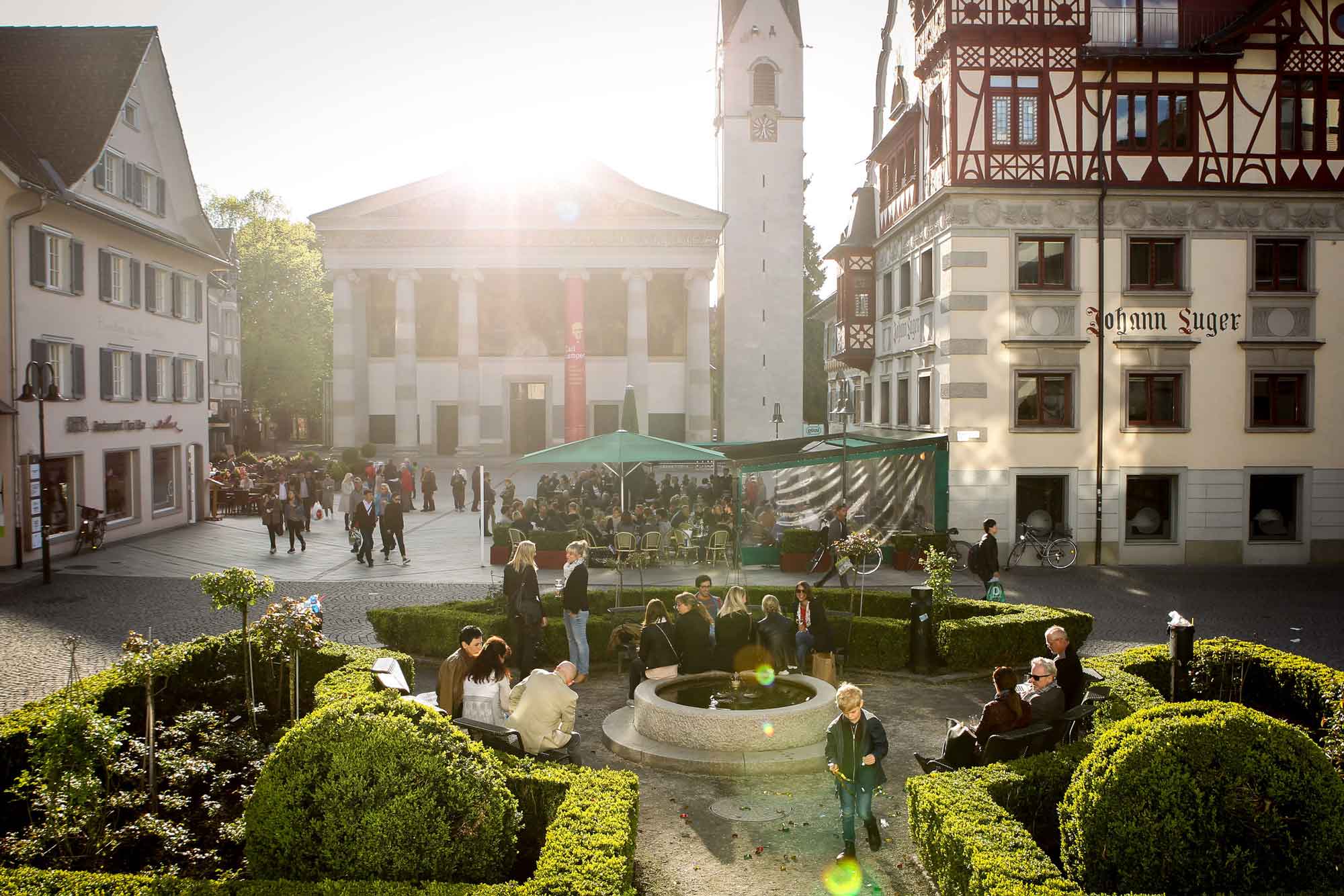
Dornbirn is working rigorously to drive its climate protection policy forward, building on a strategy that began as many as 25 years ago. Now, the city is busy developing binding standards that will cover all areas of local government and are clearly aligned with the target of becoming climate-neutral by 2040. Dialogue with other towns and cities is providing key impetus for these efforts.
Climate protection and the environment have been an integral part of Dornbirn’s administrative setup and policymaking for some decades now. The city adopted a dedicated environmental programme and binding environmental mission statement as long ago as 1998 and has been a certified e5 municipality under Austria’s national programme for energy-efficient and climate-active communities since 2002. Dornbirn was also one of the first Austrian cities to integrate a climate relevance audit into the process for drawing up its budget. This requires all projects to be assessed for their impact on climate targets right from the outset when expenditure for the coming year is being planned.
“This is all about following the principle of economic common sense,” explains Thomas Pieber, head of the Pioneering City: Mission Climate Neutrality project. “Especially when budgets are tight, it’s our duty to weigh up investments not only in terms of acquisition costs but also based on their total life-cycle costs.”
Building skills
The partnership with the BMIMI has enabled “pioneer” job roles to be created in the city’s departments for structural engineering, civil engineering and urban planning. Rather than being seen as a standalone task for a single environmental department, climate protection issues are directly integrated into the city’s planning processes. The newly appointed specialists are contributing specific expertise and strengthening links and cooperation between the individual departments. “We want this integrated approach to have become second nature within three years, which is how long the funding runs for,” Pieber says.
Driven by dialogue
Sharing experiences with other towns and cities and learning from one another are both key components of the “pioneering cities” initiative. Right at the start of the project, a delegation from Dornbirn made up of policymakers and representatives from administration headquarters visited the Dutch city of Utrecht, which is regarded as a pioneer in sustainable urban development. They returned from their trip convinced that the path to climate neutrality requires clear objectives for policymakers and administrators that will enable progress to be assessed impartially. At the same time, it is important to get active quickly and have the courage to try out new concepts. “You don’t always have to unleash the technically perfect high-end solution straight away,” Thomas Pieber points out. “You often get more out of putting pragmatic measures in place quickly and trying things out within the urban space itself instead of spending years at the drawing board.”
Circular economy in a pilot neighbourhood
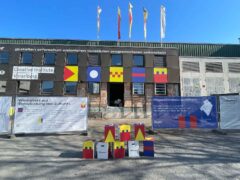
Dornbirn’s Campus district is serving as a “living lab”. An existing neighbourhood, it is home to the city’s hospital, a number of Vorarlberg University of Applied Sciences buildings, the company Meisterbäcker Ölz and the former industrial halls of the textile manufacturer F.M. Hämmerle, amongst other things. The city intends to work together with many various stakeholders to initiate solutions for the neighbourhood’s sustainable development that can be easily reproduced elsewhere. The city council has purchased five of the derelict industrial halls. A key role is being played by “CampusVäre”1 an active municipal organisation that has been driving the renovation and sustainable use of Hall 4. It is intended to become a centre for innovation, the creative industries, art and culture – complete with offices for creative businesses as well as event spaces, bars and restaurants. The renovation of the hall stuck rigorously to a concept that is compatible with the circular economy, the aim being to reuse as much of the material already available on site as possible and to only use recyclable components. The offices were made from local timber, designed as insulated boxes and arranged in a “box-in-the-box” system around the atrium. This meant that the hall itself did not need insulating, thus saving a significant amount of money and resources.
klimaneutralestadt.at/en/projects/pioneer-cities/pioneer-city-dornbirn.php
1 www.c-i-v.at/de/umbau-fertig-los