Wiener Neustadt has already done some important groundwork and has devised its own climate neutrality roadmap. As part of the partnership with the BMIMI, more staff have been taken on who are devoting all of their time to climate neutrality in a range of areas: urban development, transport, environment, climate and energy. The city wants to create conditions conducive to climate-friendly development while also preserving a high quality of life for its residents.
Wiener Neustadt has been benefiting from an exchange of knowledge with other Austrian cities ever since the “pioneering city” project got under way. This network is extremely important, as project manager Raimund Wiesinger emphasises: “As part of the accompanying process, we’re working together in focus groups on issues like neighbourhood development and sustainable mobility with the support of our scientific partners.”
“This is enabling us to find out what other cities know about relevant issues and apply it to Wiener Neustadt very quickly, and vice versa. In my opinion, this is the great strength of the ‘pioneering cities’ partnership,” explains Raimund Wiesinger.
Laying the perfect foundations
Wiener Neustadt had already developed a climate neutrality roadmap in the previous project with support from the Climate and Energy Fund1. This roadmap sets out numerous measures relating to mobility, energy, waste management and the circular economy as well as planning and governance. One key finding from this process has been that, although the city is unable and unwilling to interfere in the everyday lives of its citizens, it has a duty to foster the best possible environment and incentives for them to live a climate-friendly life.
Driving the energy and mobility transformation
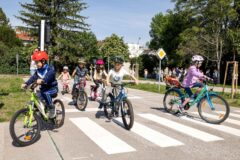
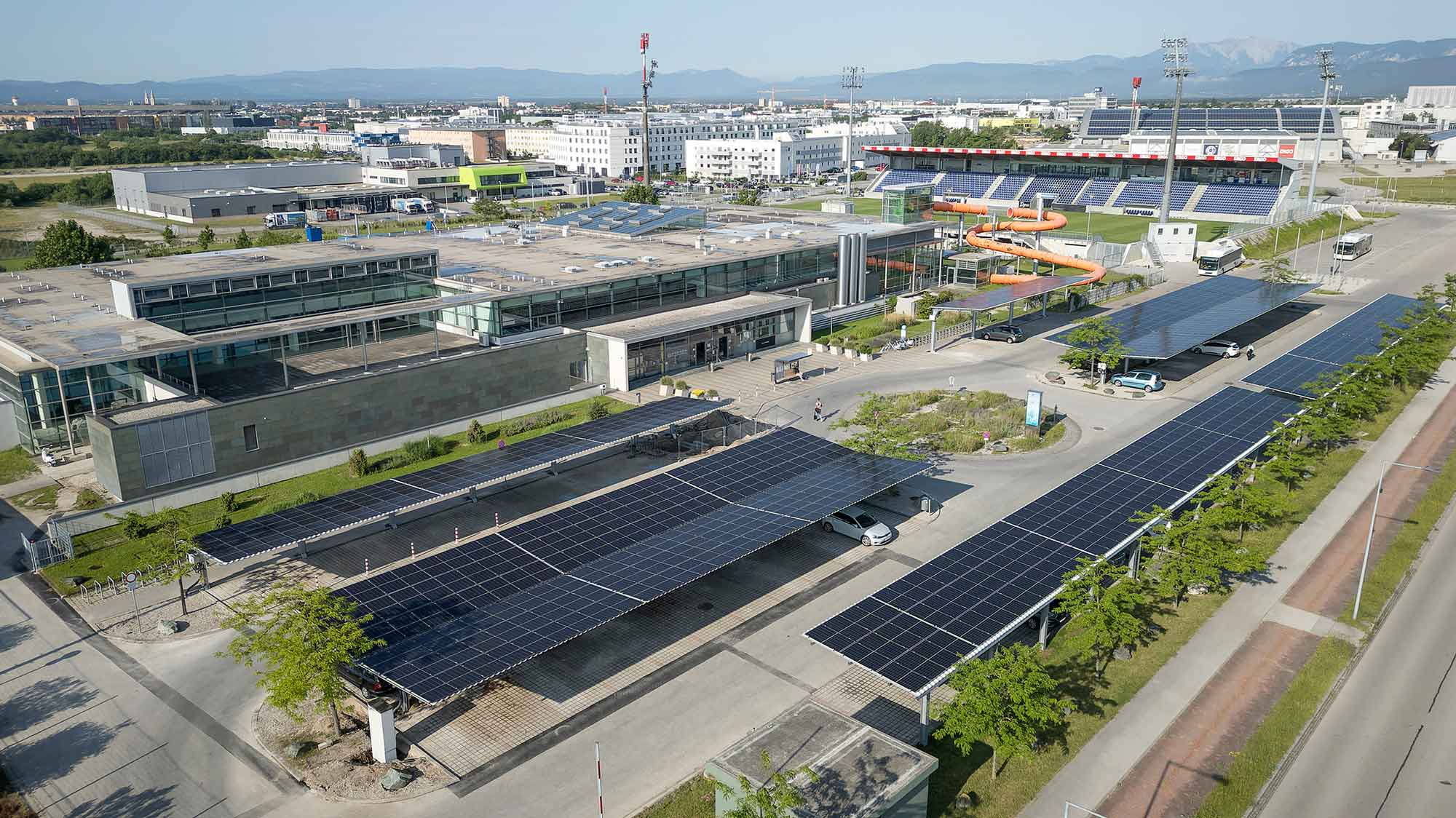
In the transport sector, the city prioritizes the development of offerings that facilitate a more convenient shift from private car use to sustainable mobility options. This includes promoting cycling and expanding the local bus network.It is currently working on a city-wide mobility app that shows users ride-sharing options at a glance. The energy transition is a key area of focus. Wiener Neustadt has significantly intensified its efforts to harness more solar power in recent times, including building a large open-space PV system on an old dumping site for railway ballast and covering the parking spaces outside the municipal indoor swimming pool with solar panels. The city currently generates a total of 2,200 kWp from solar and is aiming to gradually decarbonise its energy requirements even further over the next few years. Work is also under way on a municipal energy plan so that future fields of action can be identified and measures conducive to a sustainable energy supply can be planned.
Flagship project: Altes Rathaus
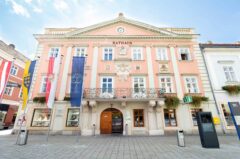
The city centre has been chosen to serve as a pioneering neighbourhood. At its heart is the “Altes Rathaus”, or “Old City Hall” – a historic building that is to undergo extensive renovation in the next few years to make it climate-friendly. The big challenge here lies in ensuring that the requirements associated with the building’s listed status are met. Together with the city’s construction department, innovative solutions and measures are currently being devised that will preserve the listed building while enabling modern energy standards and a high level of user comfort. With the renovation of its “Altes Rathaus”, Wiener Neustadt wants to deliver a flagship project and thus serve as a blueprint for other owners of listed buildings in the city centre.
klimaneutralestadt.at/en/projects/pioneer-cities/wiener-neustadt-klimaneutral.php
1 Wiener Neustadt initially began developing a climate neutrality roadmap as part of a Climate and Energy Fund’s call for small and medium-sized cities. As its population at the time was just near to 50,000 inhabitants, the city then took the opportunity to enter into a Pioneering-Cities-Partnership for major cities with the BMIMI.