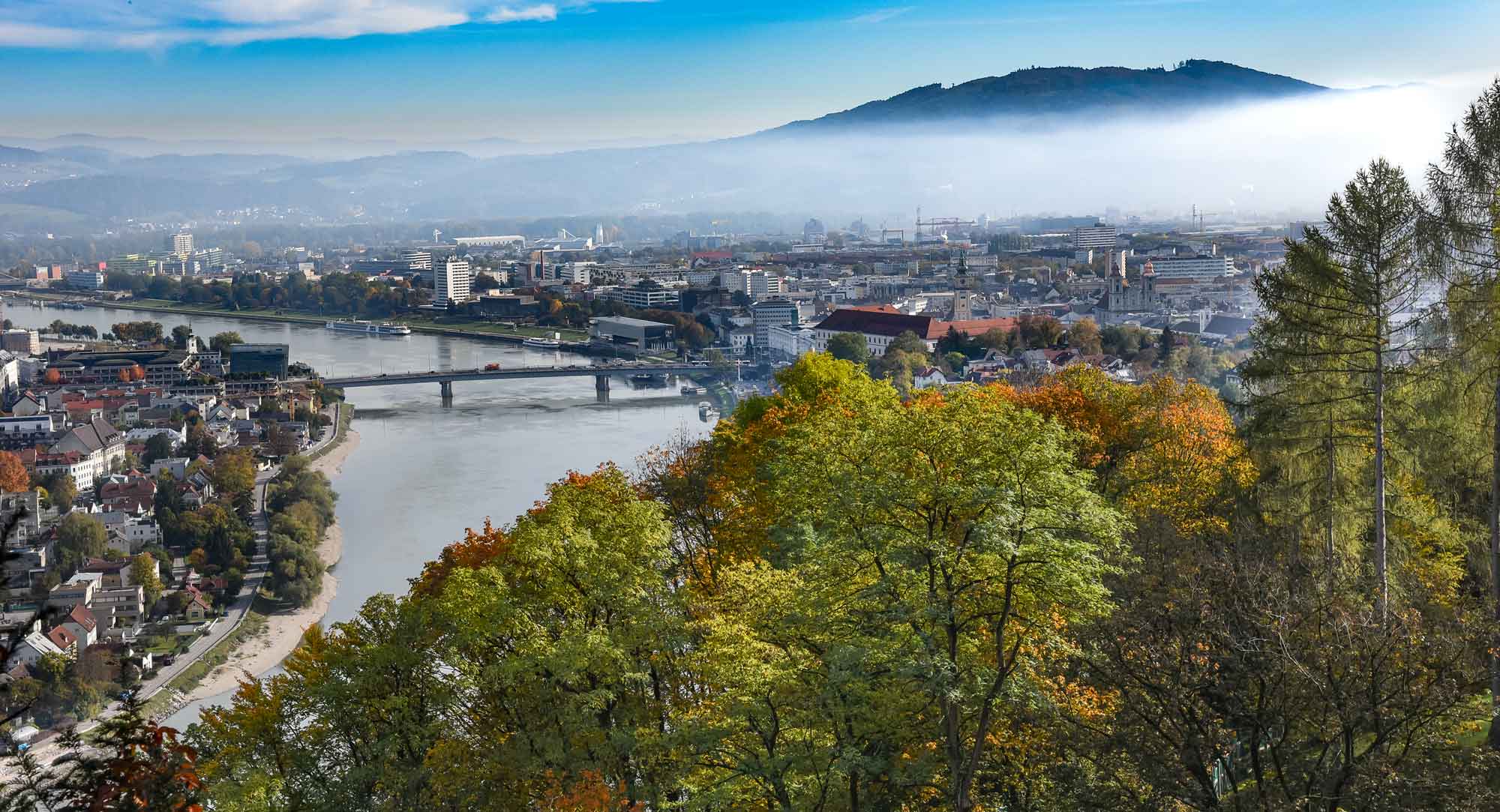
The city of Linz has developed a broad strategy across multiple organisations in its aim to become climate neutral by 2040. Under the slogan “Linz mit Ambitio3xn” the city is developing sustainable solutions in three key areas of innovation, i.e. in urban administration, in the Franckviertel district and the inter-city transfer of knowledge.
The activities in Linz are based on three strategic pillars: the main pillar is the climate neutrality concept with its 52 measures aimed at reducing greenhouse gas emissions by 90 per cent by 2040 and offsetting a maximum of 10 per cent of remaining emissions. Other important fundamentals are the Linz City Strategy (objectives and methods for holistic urban development) and the Climate Change Adaptation Concept, which was used to develop further specific recommendations and measures for the city.
Building up resources strategically
Linz relies heavily on cooperation with external partners on its path towards climate neutrality. The funds from the partnership between multiple public authorities for instance are not only used in the city’s own administration, but also for establishing skills and expertise at the municipal partner companies, including LINZ AG für Energie, Telekommunikation, Verkehr und Kommunale Dienste (the city’s company responsible for energy, telecommunications, transport and municipal services) as well as GWG Gemeinnützige Wohnungsgesellschaft der Stadt Linz (the non-profit housing association of the city of Linz).
“We have taken an innovative approach in Linz when it comes to establishing skills and expertise by designing a process that covers multiple organisations,” explains Hanna Mayrhofer, who heads up the Linz with Ambitio3xn project. “We are convinced that the development of a climate-neutral city is a complex issue that touches on many different areas and that the challenges can only be overcome by working together. We can already see in the second year that our strategy is bearing fruit, with new follow-up projects emerging across various organisations.”
Innovative urban planning instruments
Linz is realigning the cooperative planning process and the urban planning committee in order to embed climate neutrality aspects in urban development on a sustainable basis. The tools underwent a comprehensive analysis by the project team and are currently being redesigned to actively integrate key aspects of climate neutrality throughout the entire process – from planning to implementation. “For example, all projects covered by the two instruments are to be reviewed for compliance with the klimaaktiv standards”, explains Mayrhofer. “This ensures that urban development is in line with the objectives set out in the city of Linz’s climate neutrality concept.”
Learning from one another
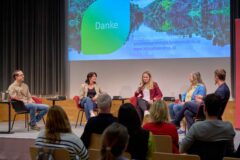
In addition to networking with other pioneering Austrian cities as part of the “Climate-neutral City” mission, the city of Linz is also sharing its expertise and new findings with other cities and municipalities in Upper Austria. The “Upper Austria Climate Governance Dialogue” was organised in spring 2025 as one of the events for this purpose, and around 400 Upper Austrian municipalities were invited1. The objective was to discuss challenges and potential solutions on the path towards climate neutrality, thereby creating a space in which knowledge, challenges and helpful experiences could be shared.
Greenhouse Gas Monitoring
A greenhouse gas emissions balance sheet was drawn up for the city of Linz for the first time in 2019 as part of the climate neutrality concept. The city is working on a system for monitoring greenhouse gas emissions at least every two years in order to map their progress towards becoming a climate-neutral city and their remaining GHG budget. The results are presented to Linz city policymakers to help them in their governance processes. “The first presentation took place this October at the extraordinary Climate City Senate meeting on the GHG balance of the city of Linz for 2023”, says Mayrhofer.
The Franckviertel pilot district
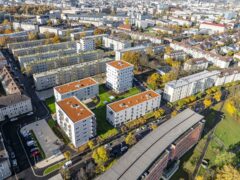
Franckviertel is a district of Linz that mostly contains buildings dating from 1919 to 1944. One focus of the project here is the decarbonisation of the energy infrastructure. Many of the buildings and apartments are still supplied with gas, often with a dual infrastructure consisting of gas and district heating, which is expensive to maintain. The objective is to expand district heating, reduce the costly dual infrastructure and encourage and support citizens to switch to district heating.
Financing climate neutral buildings
Housing developers in the non-profit sector depend on Upper Austrian housing subsidies to implement their building projects, yet there are conflicts regarding the current subsidies and aspects of climate neutral construction and renovation. Led by Sonja Bauernschuster from the Pioneering City team, the Linz not-profit housing association GWG is currently working intensively on realigning the funding guidelines. All non-profit organisations in Upper Austria are invited to collaborate in a two-year process as part of the “Gemeinnützige Bauwende OÖ” (Upper Austria Non-Profit Construction Transition) project, which kicks off in the autumn of 2025.
klimaneutralestadt.at/en/projects/pioneer-cities/linz-wit-ambitio3xn.php
www.linz.at/umwelt/linzmitambitio3xn.php